Farmers Market Buying Checklist: 10 Questions to Ask Before You Pay
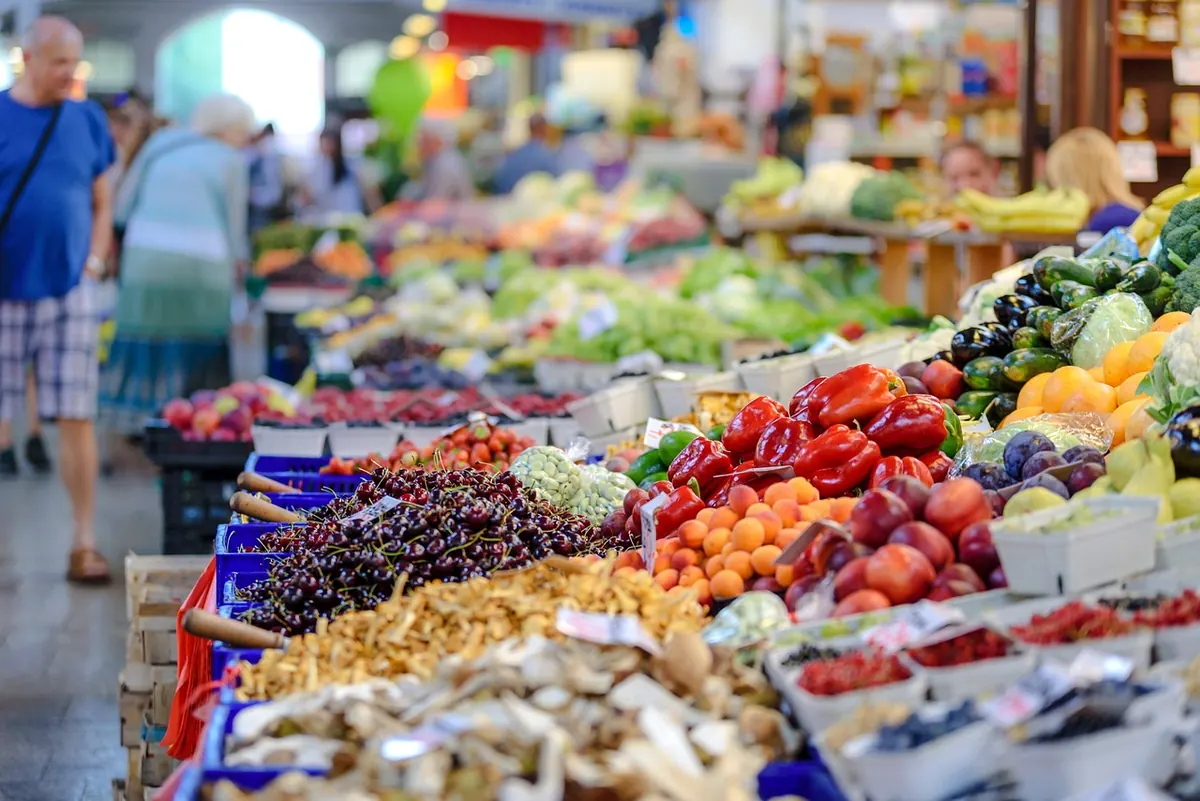
The basket is heavy, the coffee is finished, and the stall in front of you looks exactly right: crates of tomatoes, a chalkboard promising farm freshness, and a vendor who has already handed you a slice of peach. This is the moment when a little curiosity pays off. Not an interrogation — a conversation. Two or three questions, asked while you count out change, will tell you more than any sign on a crate.
Market labels are written to sound good, and some of them are better than others. Most vendors are honest and happy to explain what they do. A few are resellers with a talent for display. The ten questions below separate one from the other in about a minute, and they cost nothing but a bit of nerve.
Start With Origin: Three Questions About Place
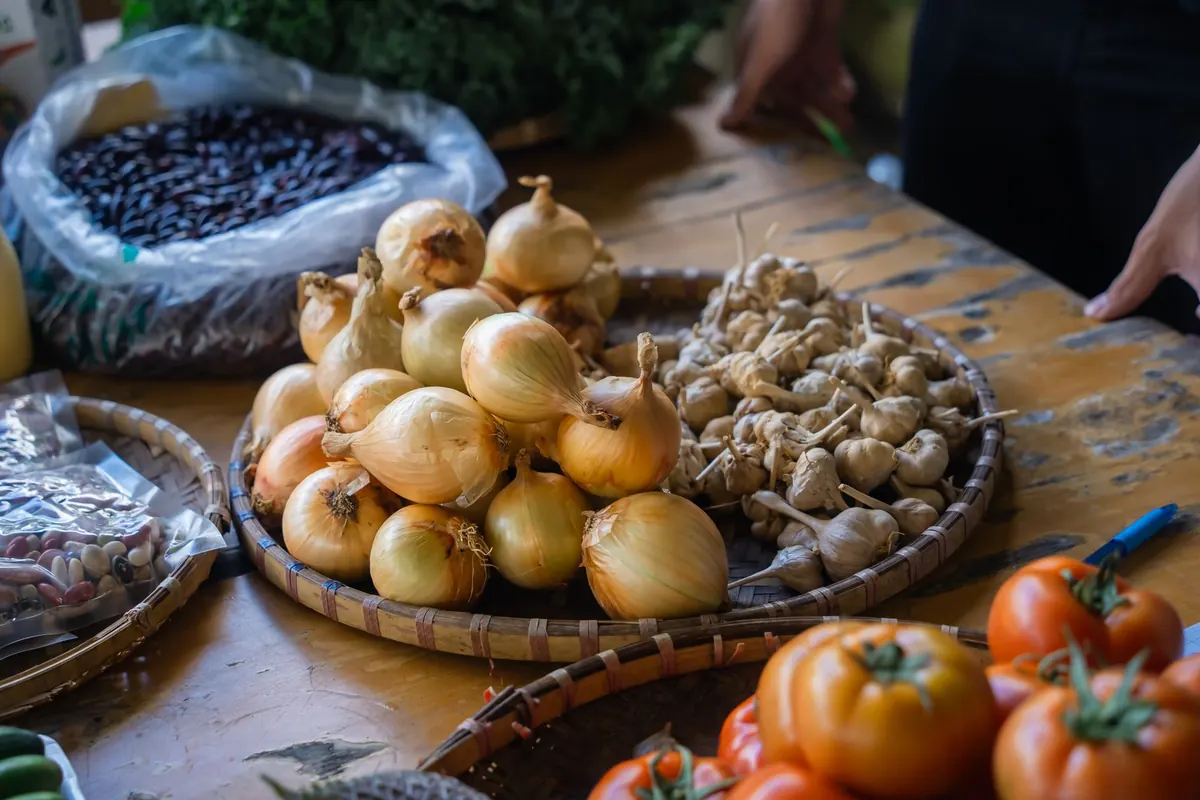
Begin with the broadest one, and aim it at the whole table. “Is everything here from your own farm?” A plain yes is a good start. A plain no is not a bad sign either — plenty of excellent stalls belong to cooperatives, or to growers who bring in lemons and oranges from a partner further south. What you are listening for is a specific answer. “We grow the vegetables; the cheese comes from my brother-in-law's dairy in the next valley” tells you more than any hand-painted board.
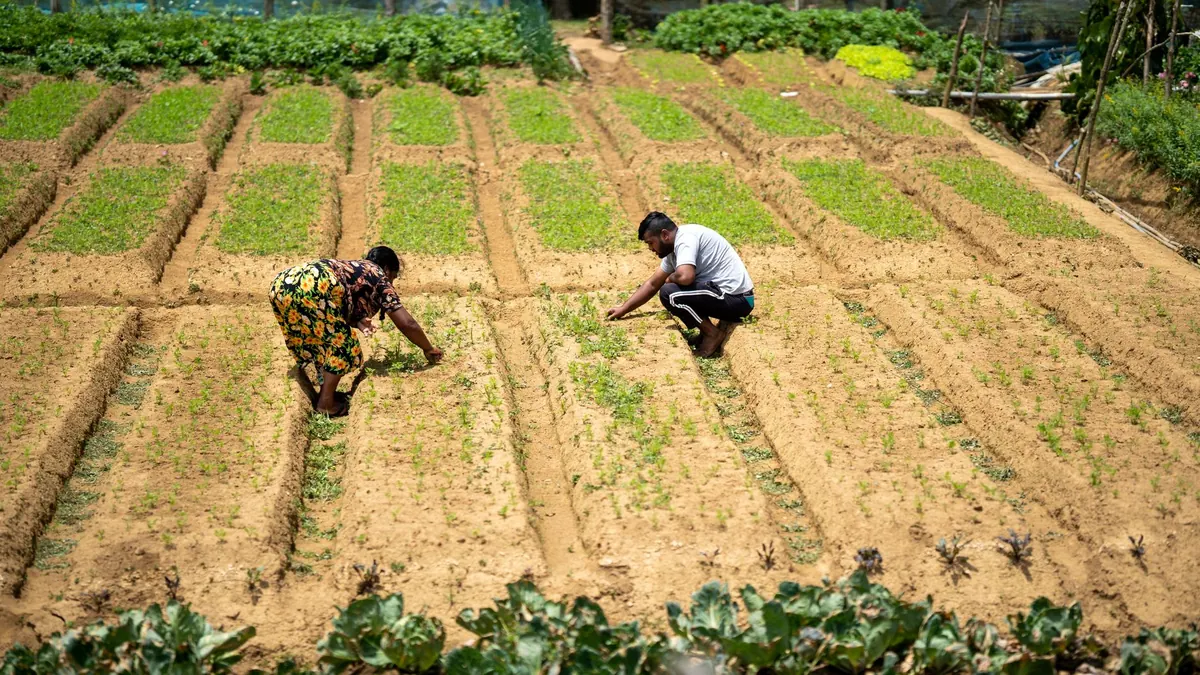
Then narrow it down. “Where is the farm, exactly?” Ask for a village, a rough distance, the length of the drive. Someone who leaves at four in the morning so the lettuce is cut two hours before it reaches you has made a deliberate choice about freshness. If the answer stays vague — “the area”, “the hills” — ask once more, pleasantly: “Which hills?” Then let it go. You already have your answer.
For anything already made — jam, bread, cheese, cured meat — the question changes. “Who made this, and where?” A stall selling preserves under its own name may make them in its own kitchen or buy them from a larger producer and apply its own label. Both are legal. Only one is what most shoppers assume they are buying.
Freshness: Ask for a Date, Then Use Your Senses
“When was this picked?” Ask it about the item in your hand, not the stall in general. Tomatoes picked yesterday and tomatoes picked four days ago look similar under market light and behave very differently on your kitchen counter. For cheese, ask its age and when it was made; for bread, whether it came out of the oven this morning. Vendors who know their product answer instantly. Vendors who hesitate usually have a reason.
The second freshness question is the one that saves you money: “How long will this keep, and how should I store it?” A good producer will tell you to keep the basil out of the fridge, to wrap the cheese in paper rather than plastic, to eat the peaches first and the pears on Thursday. That kind of detail is hard to fake, and it turns a purchase into a plan.
Read the stall while you listen
Look at the crates, not just the produce. Damp cardboard under the greens means they were watered recently to perk them up. A single tired bunch at the front of an otherwise crisp pile is normal; an entire table of soft-edged specimens is not. Smell the herbs, lift a basket to check the layer underneath, and notice whether the produce is arranged in small batches — a sign of a stall that restocks rather than a stall that empties one big box over the day.
Production: What the Sign Can't Tell You
This is where a short conversation beats any certificate hanging behind the till. “Do you spray, and what do you use?” You are not asking for a lecture on agronomy. Listen for specificity: “We treat with copper in wet springs, nothing else” is a real answer. “We're basically organic” is a dodge, even if it turns out to be true. If certification matters to you, ask whether they are certified and by whom — some small growers farm to organic standards without paying for the annual inspection, and they will usually say so.
For meat, eggs and dairy, ask “How are the animals raised, and what do they eat?” Words like free-range and pasture-fed mean different things at different farms. Ask about outdoor access, feed, and how long the animals live before slaughter. A farmer who raises a dozen pigs a year will talk about them for as long as you let him.
For prepared food, ask “How is this made, and what's in it?” A stall selling jam should be able to tell you the fruit-to-sugar ratio without reading a label. Ask whether the bread is sourdough or yeasted, how long the cheese was aged, whether the pesto contains preservatives. If a product has no ingredient list, the vendor is your ingredient list.
Price: The Question Most Shoppers Skip
“What's the price, and how is it sold?” Sounds obvious, and it is the most common source of quiet resentment at a market. A bunch, a kilo, a piece, a tray — clarify before you point at what you want. Then ask what happens with quantity: many stalls charge less for a full box, and almost every stall has “seconds” — bruised fruit, odd-shaped vegetables — that are perfect for jam, sauce or soup and cost a fraction of the display price.
One more question, and it pays for itself: “Would you take an order for next week?” Pre-ordering a chicken, a kilo of ricotta or a case of tomatoes saves you a queue, saves the vendor waste, and quietly moves you from customer to regular. Ask what will be at its best next Saturday while you are at it, and let the market plan your cooking for you.
Your Ten Questions, in Order
- Is everything here from your own farm?
- Where is the farm, exactly?
- Who made this, and where?
- When was this picked or made?
- How long will it keep, and how should I store it?
- Do you spray, and what do you use? Are you certified?
- How are the animals raised, and what do they eat?
- How is this made, and what's in it?
- What's the price, how is it sold, and do you have seconds or a bulk rate?
- Can I order ahead for next week?
How to Ask Without Spoiling the Mood
Pick two stalls you like and go back to them. Ask one question per visit rather than running through the whole list — you will get better answers and a warmer welcome. Go early for choice, late for bargains, and bring cash, since small producers appreciate not paying card fees on a six-euro sale. Write down what you learn: the cheese that was aged four months, the grower whose tomatoes peak in the last week of August, the stall that sells out of eggs by nine.
And when a vendor gives you a straight, detailed answer, buy something. That is the whole transaction. Six months of small, polite questions will leave you with a market you actually know — and a shortlist of people whose food you can trust without reading a single sign.
Photo: AS_Photography / Pixabay
You Might Also Like
A practical guide to building your own day route through local markets, small producers and craft workshops, with realistic timing, tasting tips and a schedule that survives real life.
Farmers markets win on freshness and producer contact; specialty shops win on variety, convenience and curation. Here is how to choose the right source for each purchase.